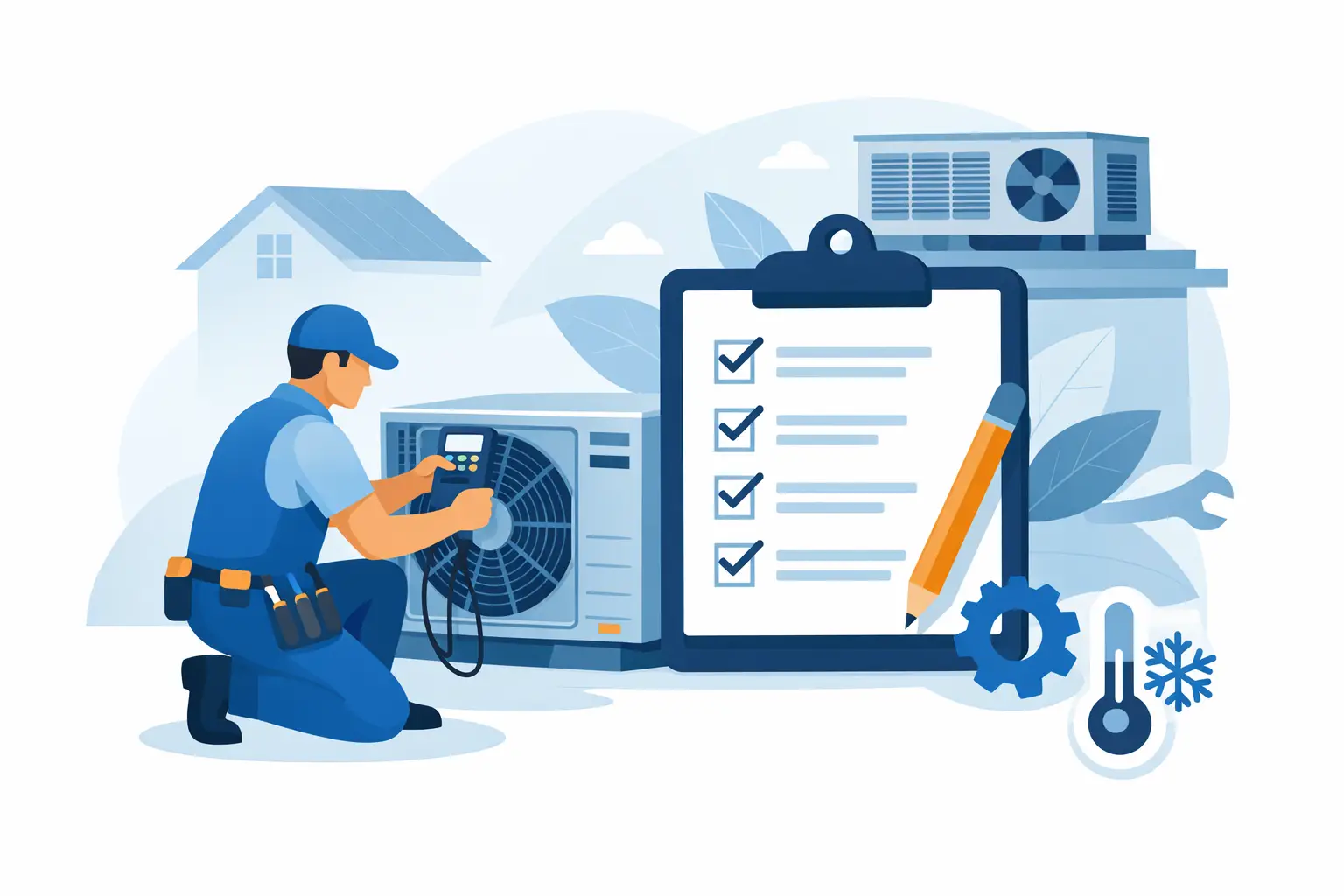
If your AC quits during a San Antonio heat wave or your heating system struggles on a cold morning, the problem usually did not start that day. In many cases, it started months earlier with dirt buildup, worn parts, restricted airflow, or a drain issue that went unnoticed. A solid hvac preventive maintenance checklist helps catch those problems early, lower the risk of surprise repairs, and keep your system running the way it should.
Preventive maintenance is not just about avoiding breakdowns. It is also about protecting efficiency, indoor comfort, air quality, and the life of your equipment. For homeowners, property managers, and business owners, routine maintenance is one of the most practical ways to control operating costs without cutting corners.
Why an HVAC preventive maintenance checklist matters
Heating and cooling systems work hard in Texas. Long run times, heat, dust, and humidity all put stress on equipment. Even a newer system can lose performance if filters stay clogged, coils get dirty, or electrical connections begin to loosen.
The reason a maintenance checklist matters is simple. HVAC systems rarely fail all at once without warning. Most issues build slowly. A capacitor weakens. A blower motor starts pulling the wrong amperage. Condensate drainage becomes restricted. Refrigerant performance drops because airflow is poor. On their own, these may seem minor. Left alone, they turn into expensive repairs, comfort complaints, and avoidable downtime.
A checklist creates consistency. Instead of waiting for a problem, each service visit follows a process that checks the condition, safety, and performance of the system. That is how you get honest recommendations based on what the equipment actually needs, not guesswork.
HVAC preventive maintenance checklist for homeowners and property managers
Some parts of an HVAC preventive maintenance checklist are simple enough for a property owner to monitor. Others should always be handled by a licensed professional. The goal is not to turn routine maintenance into a do-it-yourself repair project. The goal is to know what should be checked and why it matters.
Air filter inspection and replacement
A clogged air filter is one of the most common and most preventable HVAC problems. When airflow is restricted, your system has to work harder to move air through the ductwork. That added strain can reduce efficiency, affect temperature control, and contribute to frozen evaporator coils or overheating components.
In many homes, filters should be checked monthly and replaced based on system use, indoor air quality conditions, pets, and filter type. In rental properties or commercial spaces, replacement intervals may need to be more frequent. There is no one-size-fits-all schedule here. It depends on the building, occupancy, and how the system is used.
Thermostat operation and calibration
A thermostat should do more than turn the system on and off. It should read temperature accurately, maintain consistent settings, and communicate properly with the HVAC equipment. If the thermostat is off by a few degrees or cycles the system improperly, comfort and energy use both suffer.
During maintenance, thermostat settings, response times, programming, and battery condition should all be checked. If a building still uses an older thermostat, an upgrade may improve control and efficiency, but only if it fits the system and the customer’s goals.
Condensate drain and drain line cleaning
Drain problems are common in cooling season, especially in humid climates. Algae, sludge, and debris can build up in the condensate line and cause water backup. That can lead to water damage, overflow shutoffs, musty odors, and service calls that could have been prevented.
A proper inspection includes checking the drain pan, flushing or clearing the drain line, and confirming proper drainage. This is one of those maintenance items that often gets overlooked until there is water where it should not be.
Outdoor condenser inspection
The outdoor unit needs open airflow and clean coil surfaces to reject heat effectively. Dirt, grass clippings, cottonwood, leaves, and fence obstructions can all reduce performance. If the condenser coil is dirty, head pressure can increase and efficiency can drop.
A maintenance visit should include inspecting the outdoor coil, cleaning it when needed, checking the fan condition, and making sure the area around the unit is clear. Homeowners can help by keeping vegetation trimmed back, but coil cleaning and component checks should be done carefully to avoid damage.
What a professional HVAC maintenance visit should include
A true maintenance service goes beyond changing a filter and spraying off the outdoor unit. A technician should inspect how the full system is operating, including performance, safety, and wear conditions.
Electrical components and connections
Loose electrical connections can create inconsistent operation, component damage, or safety concerns. Maintenance should include checking wiring, contactors, capacitors, relays, breakers, and voltage readings. A failing capacitor, for example, may still let the system run for now, but that does not mean it is healthy.
This is where experience matters. The right recommendation is not based on fear or pressure. It is based on measurable signs that a component is wearing out and likely to fail.
Blower assembly and airflow performance
Indoor airflow affects almost everything – comfort, humidity control, energy use, and system reliability. A dirty blower wheel, weak motor, or airflow imbalance can cause hot and cold spots, high utility bills, and reduced equipment life.
Professional maintenance should include inspecting the blower motor, wheel, housing, and amp draw. In some cases, airflow problems are tied to duct issues rather than the air handler itself. That is why a good technician looks at the full picture before recommending repairs.
Evaporator coil condition
The evaporator coil absorbs heat from indoor air, and when it gets dirty, the system loses efficiency fast. In severe cases, low airflow across the coil can contribute to icing and water issues. Coil inspection is an important part of preventive service, especially if filters have not been changed regularly.
Not every coil can be fully cleaned during a basic maintenance visit, because access and contamination levels vary. Still, the condition should be evaluated so the customer knows whether routine cleaning is enough or a deeper service is needed.
Refrigerant and cooling performance
Maintenance should include checking system temperatures, pressures when appropriate, and overall cooling performance. Low refrigerant is not normal wear and tear. If charge is low, there is usually a leak or another underlying issue that needs to be diagnosed properly.
That is an area where honest service matters. Topping off refrigerant without finding the cause may provide a short-term improvement, but it usually does not solve the actual problem.
Heating system safety checks
For furnaces and heating equipment, preventive maintenance should include inspecting burners, ignition components, heat exchangers, safeties, gas connections, and venting. Safety comes first with heating systems. Even if the unit seems to be running fine, hidden problems can affect reliability and occupant safety.
Heat pumps also need heating-mode performance checks, defrost operation review, and electrical inspection before colder weather arrives.
When preventive maintenance should be scheduled
Most systems should be professionally serviced twice a year – once before cooling season and once before heating season. That schedule gives the best chance to catch seasonal issues before the equipment is under peak demand.
That said, some properties need more attention. Older systems, high-use commercial equipment, rental properties with heavy occupancy, and buildings with indoor air quality concerns may benefit from a customized maintenance plan. It depends on equipment age, runtime, and how critical uninterrupted comfort is for the space.
If your system is already making unusual noises, short cycling, leaking, or struggling to keep up, maintenance may not be enough. At that point, a diagnostic visit is usually the better next step.
The biggest mistake people make with HVAC maintenance
The most common mistake is waiting until the system stops working before taking action. The second most common is assuming all maintenance is the same.
A rushed tune-up that skips system testing may check a box, but it does not always protect the equipment. Good maintenance is detailed, consistent, and honest about what is fine, what needs watching, and what needs repair now. That approach helps customers plan ahead instead of getting blindsided.
For customers who want dependable service without unnecessary upselling, working with a company that values accurate diagnostics and repair-first recommendations makes a real difference. Cadillac Air Conditioning & Heating approaches maintenance that way because long-term performance matters more than quick one-time service calls.
Routine maintenance will not prevent every repair. Parts still wear out, older systems still age, and extreme weather still pushes equipment hard. But a strong checklist gives you a better chance of catching problems while they are still manageable, and that is often the difference between a simple service visit and a costly emergency. If your system has not been inspected recently, now is a good time to get ahead of the next season instead of reacting to it.
