A San Antonio AC that runs all afternoon but never quite cools the house is not always facing a major breakdown. Sometimes, it is losing refrigerant slowly through a small leak. Knowing how to spot refrigerant leaks can help you act before your comfort, energy costs, and equipment are affected.
Refrigerant does not get used up like fuel. Your air conditioner circulates the same refrigerant in a closed system. If the level is low, there is usually a leak that needs to be located and repaired. Adding refrigerant without finding the source may provide temporary relief, but it does not solve the underlying problem.
Why Refrigerant Leaks Need Prompt Attention
Refrigerant absorbs heat from inside your home and releases it outdoors. When the charge is low, your system has to work longer to remove the same amount of heat. That can lead to warmer rooms, higher utility bills, and unnecessary strain on the compressor – one of the most expensive parts of an AC system to replace.
A small leak can also become a larger one. Vibration, corrosion, aging connections, and damaged copper lines may allow refrigerant to escape gradually. The sooner a qualified technician diagnoses the issue, the better the chance of protecting the rest of the system and avoiding a more involved repair.
Signs That Can Help You Spot Refrigerant Leaks
No single symptom confirms a refrigerant leak on its own. A clogged filter, dirty coil, thermostat issue, airflow restriction, or failing component can create similar problems. Still, these warning signs are worth taking seriously, especially when several happen at the same time.
Your Home Is Not Cooling Like It Used To
Weak or uneven cooling is often the first thing homeowners notice. The thermostat may be set correctly, the indoor fan may be running, and air may still come from the vents, but the house takes much longer to cool. You may also find that certain rooms stay warm while the system runs nearly nonstop.
During a San Antonio summer, high outdoor temperatures will naturally make an AC work harder. But if the system used to keep up under similar conditions and now cannot, low refrigerant is one possible cause that deserves a professional inspection.
Your Energy Bills Rise Without a Clear Reason
A refrigerant leak reduces cooling efficiency. As the system loses charge, it must run longer to meet the thermostat setting. That additional runtime can show up as a noticeably higher electric bill, even if your household habits have not changed.
Compare bills with the same season last year when possible. A higher bill alone does not prove a leak, since weather, insulation, and electricity rates all matter. It is more meaningful when paired with weak cooling, long cycles, or ice on the equipment.
Ice Forms on the Refrigerant Line or Indoor Coil
A frozen evaporator coil is a common sign of a problem that needs attention. You may see frost or ice on the larger insulated copper line near the outdoor unit, or you may notice water around the indoor unit after the ice melts.
Low refrigerant can cause coil temperatures to drop too far, allowing moisture in the air to freeze. However, restricted airflow from a dirty filter, blocked return vent, or blower issue can cause freezing too. Turn the system off if you see ice and allow it to thaw. Do not chip at the ice or keep operating the AC in hopes that it will clear itself.
You Hear Hissing or Bubbling Near the Equipment
A larger refrigerant leak may create a faint hissing sound near refrigerant lines, the indoor coil, or the outdoor condenser. In some cases, a bubbling or gurgling sound may be heard as refrigerant moves through the system.
These noises are not always a leak. Normal expansion and refrigerant movement can make occasional sounds, and other mechanical issues can be noisy as well. A persistent or new hissing sound is a good reason to schedule diagnostics rather than guessing.
There Is an Oily Residue Around Refrigerant Lines
Refrigerant itself is not easy to see, but it travels through the system with compressor oil. When a leak develops, technicians may find oily residue around fittings, valves, coils, or copper lines. Homeowners may occasionally notice this residue around the outdoor unit or exposed line set.
Avoid touching damaged lines or trying to tighten fittings yourself. Refrigerant systems operate under pressure, and an incorrect repair can worsen the leak or create a safety concern.
Your AC Runs Constantly or Shuts Down Unexpectedly
An AC that cannot satisfy the thermostat may run for unusually long periods. As refrigerant loss becomes more severe, some systems may trip safety controls or shut down to prevent damage. You might also notice warmer air from the vents or reduced airflow after the system has been running.
If your AC is struggling during extreme heat, do not wait until it stops completely. Early service can often prevent a comfort problem from turning into an emergency repair.
What You Can Check Safely Before Calling
There are a few useful observations you can make without opening equipment or handling refrigerant. First, check the air filter. A heavily clogged filter can restrict airflow and create symptoms that look similar to a refrigerant problem. Replace it if needed, using the correct size and type for your system.
Next, make sure supply vents and return grilles are open and unobstructed. Look at the larger insulated refrigerant line outside for visible ice, and check around the indoor unit for water after a freeze-up. Note whether the system is blowing warm air, cycling frequently, or running without reaching the set temperature.
These details help a technician narrow down the problem faster. They are not a substitute for testing, but they can make the service visit more efficient and help ensure you receive an accurate recommendation.
How a Professional Finds the Leak
A proper refrigerant leak diagnosis is more than checking a pressure reading and adding refrigerant. Pressure can be affected by outdoor temperature, system operation, and several mechanical conditions. An experienced HVAC technician evaluates the full system before recommending a repair.
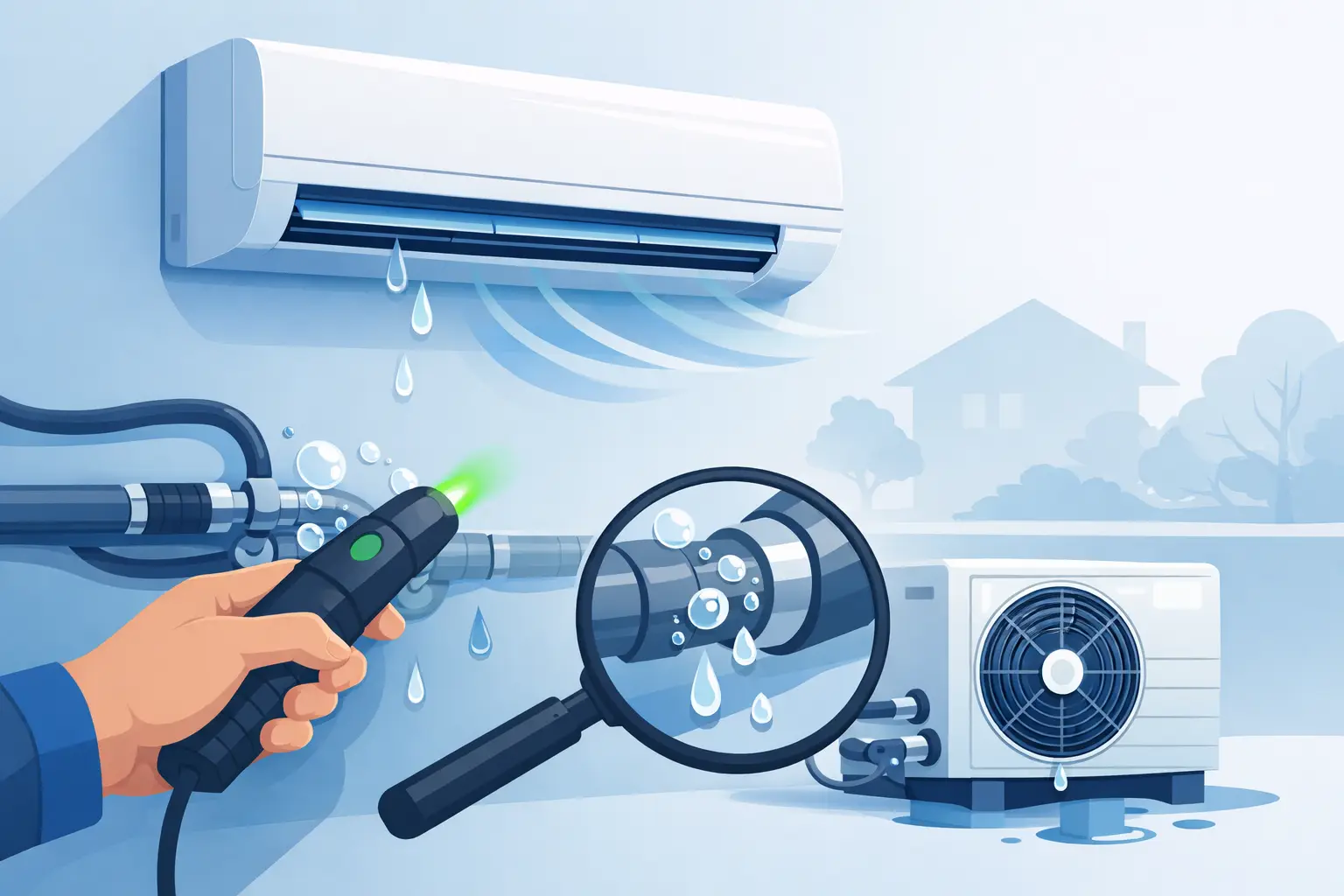
Depending on the situation, the technician may inspect visible components for oil residue, use an electronic leak detector, test with an approved solution at accessible connection points, or perform other manufacturer-appropriate leak-testing procedures. The goal is to identify the leak location, assess the condition of the equipment, and explain whether repair is practical.
Sometimes the repair is straightforward, such as correcting a leaking valve core or connection. Other cases involve a corroded indoor coil, damaged line set, or a component whose repair cost needs to be weighed against the age and condition of the system. Honest diagnostics matter here. The right choice depends on the size and location of the leak, the refrigerant type, system age, repair cost, and your long-term comfort goals.
Why “Just Add Refrigerant” Is Not the Right Fix
A system that needs refrigerant repeatedly has an unresolved issue. Recharging it without repairing the leak can mean paying for the same temporary fix again while the system continues to lose efficiency. It can also place added stress on the compressor and leave you without dependable cooling when temperatures climb.
A repair-first approach means confirming the cause, discussing available options clearly, and providing transparent pricing before work begins. If a repair makes sense, it should be completed correctly. If the system has multiple issues or a major component failure, you deserve a straightforward explanation of the trade-offs rather than pressure to make a rushed decision.
Cadillac Air Conditioning & Heating provides careful AC diagnostics for homeowners and businesses throughout the San Antonio area, with recommendations based on what your system actually needs.
When to Schedule AC Service
Schedule service promptly if you see ice on refrigerant lines, have persistent weak cooling, hear hissing near the equipment, or notice unexplained increases in runtime and energy costs. If your AC stops cooling during hot weather, turn it off to reduce the risk of further damage and arrange professional help.
Refrigerant should only be handled by qualified HVAC professionals with the proper equipment and training. The most helpful thing you can do is pay attention to early changes in your system’s performance. Catching a problem while it is still small gives you more repair options, clearer decisions, and a better chance of staying comfortable when Texas heat is at its peak.
