A San Antonio summer can expose an AC system’s limits quickly. When indoor temperatures climb, the best AC systems for homes are not simply the biggest or highest-rated units on the market. They are systems sized correctly for the home, installed with care, and matched to the way the household actually lives.
A reliable replacement should lower operating costs where practical, manage humidity, provide consistent comfort from room to room, and hold up through long Texas cooling seasons. The right choice depends on your existing ductwork, insulation, budget, fuel options, and long-term plans for the property.
Best AC Systems for Homes: Start With the Right Type
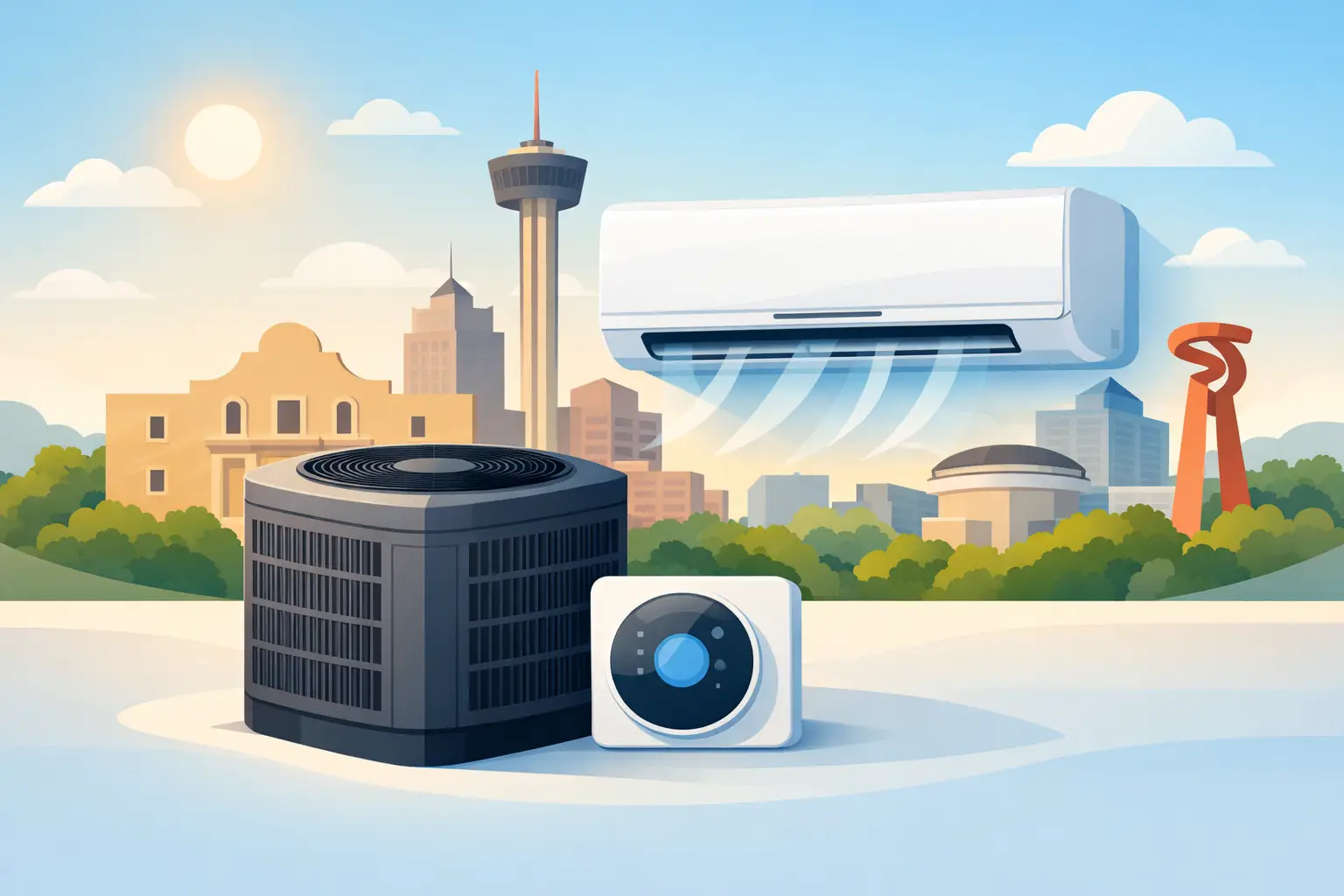
Most San Antonio homeowners choose between a central split system, a heat pump, or a ductless mini-split system. Each can be an excellent option in the right home. The best fit comes from an honest evaluation, not a one-size-fits-all sales pitch.
Central split AC systems
A central split system is the familiar setup found in many area homes. It has an outdoor condenser, an indoor air handler or furnace component, and ductwork that delivers conditioned air throughout the house. For homes with usable ducts already in place, this is often the most practical and cost-effective replacement path.
Modern central AC systems offer substantial efficiency improvements over older equipment, especially when paired with a properly matched indoor coil, blower, thermostat, and duct system. They are well suited for homeowners who want even whole-home cooling without making major changes to the home’s layout.
The trade-off is that ducts matter. Leaky, undersized, poorly insulated, or poorly designed ducts can waste conditioned air and make a quality new system perform below expectations. Installing a high-efficiency condenser without addressing a major duct issue is rarely a complete comfort solution.
Heat pump systems
A heat pump cools the home in summer and provides heat during the cooler months. Instead of creating heat through combustion, it moves heat, making it an efficient option for San Antonio’s generally mild winters.
For many homeowners, a heat pump is worth serious consideration during a full system replacement. It can provide efficient year-round comfort while reducing dependence on a separate gas heating source. Homes may still use electric heat strips for backup during occasional cold snaps, but the heat pump handles much of the heating season efficiently.
A heat pump is not automatically the right answer for every property. Existing equipment, electrical capacity, upfront budget, and household preferences all matter. A properly installed conventional central AC system can still be an excellent long-term choice.
Ductless mini-split systems
Ductless mini-splits use an outdoor unit connected to one or more indoor air-handling units. They are especially useful for garages, additions, converted rooms, older homes without ducts, and areas that never seem to stay comfortable with the central system.
Because each indoor unit can be controlled independently, mini-splits can offer strong comfort control and high efficiency. They also avoid the energy loss associated with long duct runs. For a single hard-to-cool room, a ductless system may be more sensible than replacing an otherwise serviceable central unit.
For an entire home, the appearance and placement of indoor units should be considered carefully. A whole-home ductless design can work well, but it should be planned around the home rather than treated as a quick substitute for a complete comfort assessment.
Efficiency Ratings Matter, but They Are Not the Whole Story
When comparing systems, homeowners often focus first on SEER2 ratings. This rating measures cooling efficiency, and a higher number generally means lower energy use under standardized conditions. In a climate with long cooling seasons, a higher-efficiency system can create meaningful savings over time.
Still, the highest rating is not always the best value. A premium system may take years to recover its additional upfront cost, particularly in a smaller home or a property that will be sold soon. Conversely, investing in better efficiency may make sense for a homeowner planning to stay put for many years and maintain the system properly.
Comfort features deserve equal attention. Variable-speed or two-stage equipment can run longer at lower output, which may improve humidity control and reduce temperature swings. That can be valuable in humid San Antonio weather, especially for homes with uneven cooling or families who prefer steady indoor temperatures.
A standard single-stage unit is often dependable and budget-friendly. It may be the right recommendation when the home is well suited to it and the priority is a straightforward, reliable replacement. The goal is not to sell more features. It is to select equipment that delivers a worthwhile result for the home.
Correct Sizing Is More Important Than “More Tons”
An oversized AC system can cool a home too quickly, shutting off before it has removed enough humidity. The result can be rooms that feel cool but clammy, frequent cycling, uneven temperatures, and unnecessary wear on equipment.
An undersized system has the opposite problem. It may run continuously during the hottest part of the day and still struggle to maintain the desired temperature. That places stress on the equipment and leaves homeowners frustrated when they need comfort most.
Proper sizing requires more than looking at the square footage. A professional should consider the home’s layout, insulation, windows, ceiling height, sun exposure, occupancy, ductwork, and air leakage. A load calculation provides a much stronger basis for a replacement recommendation than simply matching the size of the old system.
The old unit may have been oversized, undersized, or installed before renovations changed the home’s cooling needs. Square footage is a starting point, not a final answer.
Do Not Overlook the Rest of the System
An air conditioner is part of a larger system. Indoor equipment, refrigerant lines, drainage, electrical components, thermostats, filtration, and ductwork all affect performance. A new outdoor unit cannot overcome a failing blower motor, a restricted return duct, or a neglected condensate drain line.
Before replacement, ask for a clear evaluation of what can remain and what needs attention. In some cases, existing components are compatible and in good condition. In others, keeping an old coil or improperly sized ductwork can reduce efficiency, shorten equipment life, or create warranty concerns.
Thermostat selection also deserves a practical discussion. A programmable or smart thermostat can help manage schedules and energy use, but it should be compatible with the equipment and set up correctly. More controls are not helpful if they make the system harder to operate or lead to constant adjustments.
Choose the Installer as Carefully as the Equipment
Two identical systems can perform very differently depending on installation quality. Proper airflow, refrigerant charge, electrical connections, drainage, duct sealing, equipment leveling, and startup testing are not minor details. They determine whether the system operates safely, efficiently, and reliably.
A trustworthy contractor should explain the options in plain language, provide transparent pricing, and identify any needed repairs or improvements before work begins. Be cautious of proposals that focus only on brand names, tonnage, or a low initial price without discussing sizing, ducts, and installation scope.
At Cadillac Air Conditioning & Heating, recommendations are based on the home’s condition, comfort goals, and budget. When repair remains practical, that should be part of the conversation. When replacement is the better long-term solution, the work should be completed with the same attention to detail that protects your investment.
A Better Way to Make the Final Decision
Start by identifying the problem you want the new system to solve. Is the current unit unreliable? Are energy bills rising? Do certain rooms stay hot? Is humidity uncomfortable? Or is the system simply reaching the end of its service life? The answer helps determine whether you need a basic replacement, a higher-efficiency upgrade, duct improvements, zoning, or a targeted ductless solution.
Then compare complete proposals, not just equipment prices. Look at the efficiency level, system size, included indoor components, ductwork recommendations, thermostat, warranty coverage, labor scope, and expected maintenance needs. A clear proposal makes it easier to see the real value behind the number.
The best AC choice is the one that keeps your home comfortable through the Texas heat without creating avoidable costs or complications. A careful evaluation before installation gives you the confidence that the system serving your home was selected for the right reasons and built to be done right the first time.
