
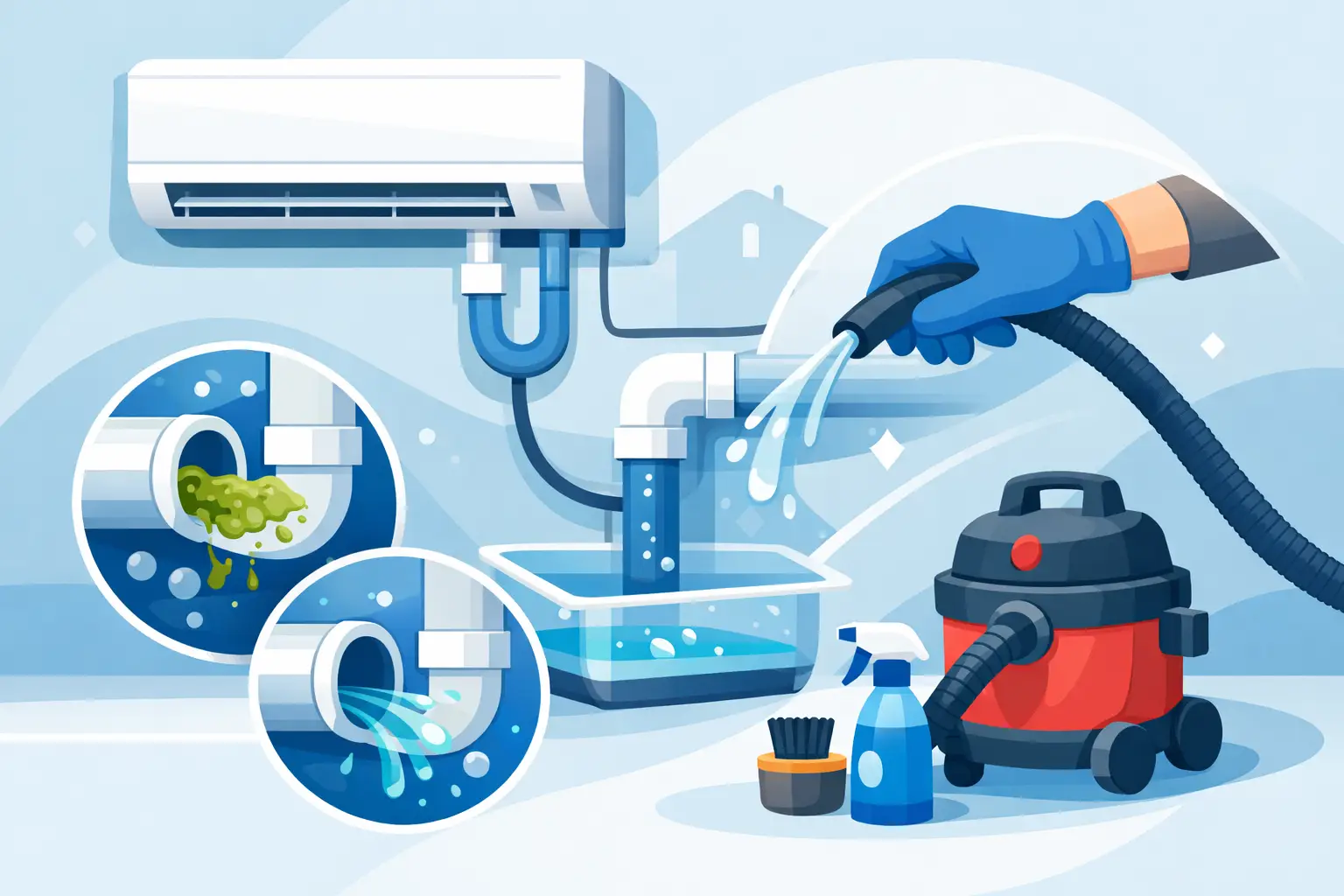
A puddle near your indoor AC unit is rarely a problem to ignore in a San Antonio summer. When moisture cannot leave the system through the condensate drain, it can overflow into a drain pan, stain ceilings, damage drywall, and eventually shut down the air conditioner. Knowing how to clean condensate drain lines can help with minor buildup, but it also helps to know when a clog points to a larger issue that needs a professional diagnosis.
Your air conditioner removes humidity as it cools your home. That water collects on the evaporator coil, runs into a pan, and travels through a PVC drain line to the outside or a plumbing drain. In Texas, where air conditioners run hard for long stretches, algae-like growth, slime, dust, and debris can build up in that line faster than many homeowners expect.
What a Condensate Drain Clog Looks Like
The most common sign is water around the indoor air handler or furnace cabinet. You may also notice a musty odor near a supply vent, water marks on the ceiling below an attic unit, unusually high indoor humidity, or an AC system that stops running even though the thermostat is calling for cooling.
Many systems have a float safety switch that turns the equipment off when water rises in the drain pan. That switch protects your home from overflow, but it does not remove the clog. Resetting the system without clearing the problem can lead to repeated shutdowns or water damage.
A visible white PVC pipe near the indoor unit is usually part of the primary drain assembly. Some systems also have a secondary drain line or an auxiliary pan beneath the unit. If water is coming from a secondary pipe outside, treat it as a warning that the primary line may be blocked.
Before You Clean the Condensate Drain
Turn off power to the AC system at the thermostat and the appropriate breaker before opening the cabinet or handling water near the equipment. If your air handler is in an attic, use a stable walkway and avoid stepping on ceiling drywall. Attic leaks can become expensive quickly, so do not rush the work.
Locate the drain line access point. It is often a capped vertical PVC tee near the indoor unit. The line may run to an exterior wall, a sink drain, a floor drain, or a condensate pump. Do not assume every setup drains outside. If you cannot confidently identify the line, stop there and schedule service rather than disconnecting pipes at random.
You will generally need a wet/dry vacuum, a small container, distilled white vinegar, clean water, and a rag. Avoid pouring harsh drain cleaners, bleach, or acids into the line. These chemicals can create fumes, damage components, harm a condensate pump, or cause problems if the line connects to a plumbing drain.
How to Clean a Condensate Drain Line Step by Step
Start by checking the drain pan and the area around the unit. If the pan is full, remove standing water carefully with a wet/dry vacuum or absorbent towels. A full pan may mean the clog is complete, the line is disconnected, or the system is producing water faster than the drain can handle.
Next, find the exterior drain outlet if your system has one. Attach the wet/dry vacuum hose to the end of the PVC line and seal the connection with a rag. Run the vacuum for one to two minutes. This pulls out loose sludge and debris without forcing it farther into the line. If a large amount of dirty water comes out, keep the vacuum running briefly, then inspect the outlet for mud, mulch, insects, or landscaping material that may be blocking it.
Return to the indoor access tee and remove the cap. Slowly pour about one cup of distilled white vinegar into the line. Vinegar can help break down light organic buildup without the risks associated with caustic cleaners. Let it sit for about 30 minutes, then flush the line with clean water.
Watch for normal drainage at the outside outlet or other termination point. If water backs up at the access tee, stop adding water. The clog may be too dense or located in a section that needs professional equipment to clear safely.
Once the line is flowing, replace the cap, restore power, and run the cooling system. Check the drain line and pan after 20 to 30 minutes of operation. The goal is not just to get water moving once. It is to confirm that the system drains consistently without leaking at a fitting or triggering a safety switch.
If Your System Uses a Condensate Pump
A condensate pump collects water in a small reservoir and pumps it upward or across a long distance. It needs a different approach. First, make sure the pump has power and the reservoir is not overflowing. Clean the reservoir according to the manufacturer instructions, and check the discharge tubing for kinks, loose connections, or blockage.
Do not pour vinegar into a pump unless the equipment instructions allow it. If the pump hums but does not move water, repeatedly trips a safety switch, or leaks from the reservoir, it is usually best to have it inspected or replaced by an HVAC technician.
When DIY Drain Cleaning Is Not Enough
A simple vacuum-and-vinegar cleaning is appropriate for light buildup in an accessible line. It is not a substitute for repair when there is standing water in an attic pan, a cracked drain pipe, a failed float switch, or recurring clogs. Those conditions require more than flushing.
Call a qualified HVAC technician if you see water damage, cannot find the blockage, have no access to the line outlet, or clear the line only to have it clog again within days or weeks. Recurring drain problems can be caused by an improperly sloped line, a missing trap, poor system setup, excessive dirt on the evaporator coil, or a drain pan that is rusted or damaged.
Commercial properties and rental homes deserve particular attention. A clogged drain can affect tenants, inventory, finished ceilings, and business operations. Property managers should document leaks promptly and address the source rather than repeatedly emptying pans or resetting equipment.
Cadillac Air Conditioning & Heating provides drain line cleaning and accurate HVAC diagnostics for San Antonio homes and businesses. A professional visit can identify whether the issue is a routine clog or a drainage design, pump, coil, or safety-switch problem. That distinction matters because the right repair protects both comfort and the property around the system.
Preventing Future Condensate Drain Clogs
Regular maintenance is the most reliable way to prevent drain problems. During an AC tune-up, a technician can clean the drain line, inspect the pan and trap, verify proper drainage, check float switches, and look for dirt buildup that may be affecting the coil. This is especially worthwhile before the heavy cooling season begins.
Between professional visits, change filters on schedule and keep the exterior drain outlet clear of soil and vegetation. A dirty filter allows more dust to circulate through the system, which can contribute to buildup around the coil and drain pan. The right filter interval depends on the household, pets, occupancy, and filter type, but a monthly visual check is a practical habit.
It also helps to pay attention to small changes. A new musty smell, a drip near the indoor unit, or intermittent system shutdown is easier and less costly to address before water reaches insulation, flooring, or drywall.
A clear condensate drain is a small part of your HVAC system, but it does an essential job every time your air conditioner runs. Handle minor cleaning carefully, and when drainage is uncertain or water is already where it should not be, choose a trained local technician who can find the cause and fix it right the first time.
