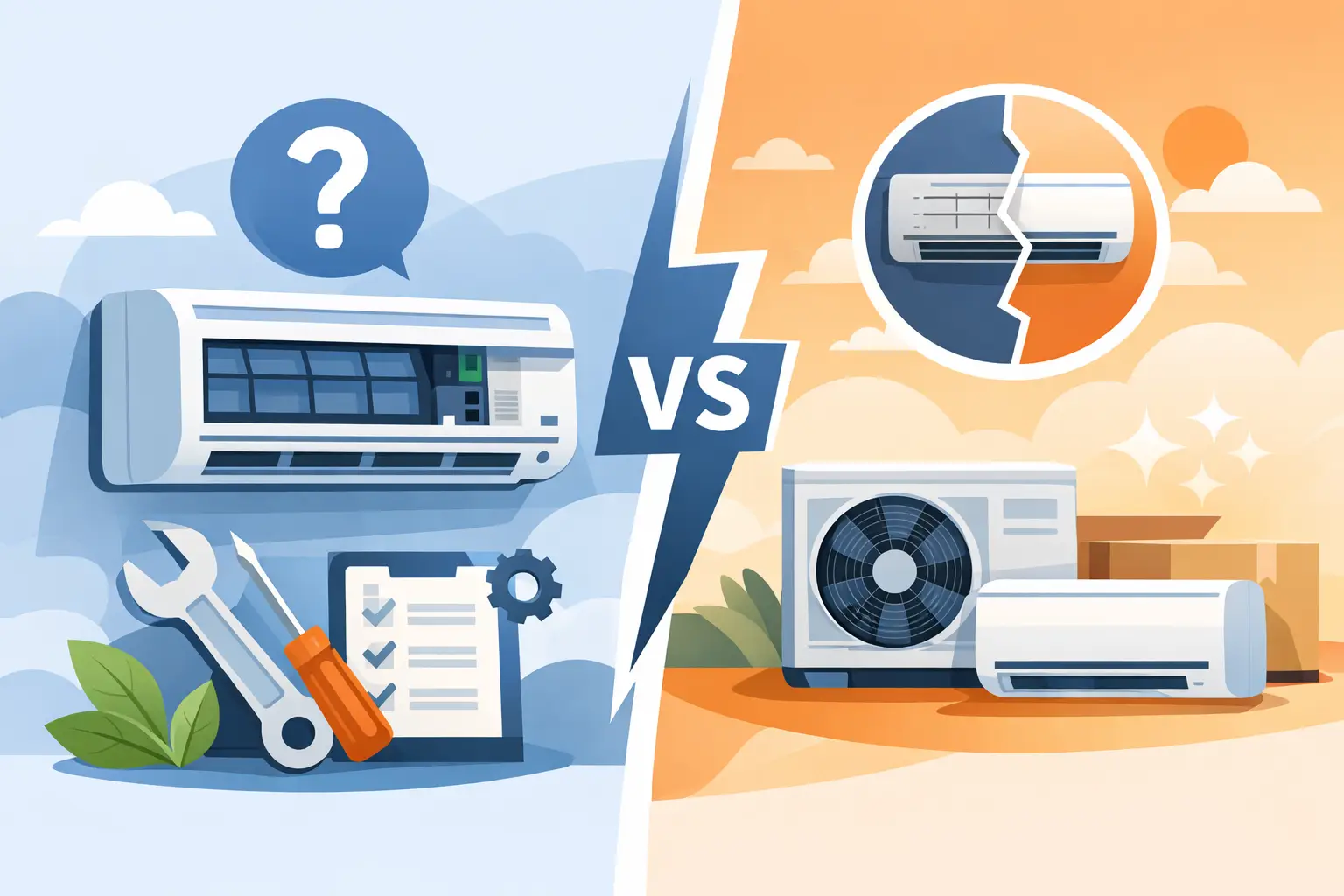
A San Antonio air conditioner can go from keeping up with a 100-degree afternoon to blowing warm air with very little warning. When that happens, the question is rarely just how to get cool again. Homeowners and property managers need to know whether to repair or replace air conditioner equipment without spending money on a short-term fix that will fail again soon.
The right answer depends on the condition of your system, not a sales quota or a one-size-fits-all rule. A reliable HVAC technician should diagnose the problem, explain the repair clearly, and help you compare the immediate cost with the system’s likely remaining life. In many cases, a targeted repair is the sensible choice. In others, replacement provides better comfort, lower operating costs, and fewer disruptions during the hottest part of the year.
Start With an Accurate Diagnosis
An AC system may stop cooling for reasons that range from simple to significant. A clogged drain line, failed capacitor, worn contactor, thermostat issue, dirty coil, refrigerant leak, or compressor problem can all produce similar symptoms from the homeowner’s perspective. That is why a diagnosis matters before making a repair-or-replace decision.
For example, a system that is running but not cooling may have a relatively straightforward electrical issue. Replacing the entire unit before checking that possibility would not be an honest recommendation. On the other hand, a technician may find multiple concerns at once, such as an aging outdoor unit, a major refrigerant leak, deteriorated coils, and airflow problems. In that case, repairing only the most urgent issue may restore cooling temporarily without solving the larger problem.
Ask for clear explanations of what failed, why it failed, what the repair involves, and whether other components show signs of wear. Transparent pricing should separate the immediate repair from any recommended long-term option so you can make an informed decision.
When AC Repair Is Usually the Better Choice
Repairing your air conditioner is often the right move when the system has been dependable, is reasonably efficient, and has years of expected service life left. A well-maintained central air conditioner commonly lasts around 12 to 15 years in Texas, though heavy summer use, installation quality, maintenance history, and local conditions can shorten or extend that range.
A repair is generally worth considering when the unit is under 10 years old and the problem is isolated. Common repairs such as replacing a capacitor, contactor, blower motor, thermostat component, drain line, or fan motor can restore dependable operation without requiring a major investment. Even a more involved repair can be reasonable if the equipment is otherwise in good condition.
Maintenance history also matters. If you have had annual tune-ups, changed filters consistently, kept the outdoor unit clear, and addressed small issues promptly, your system may have more useful life than its age alone suggests. A clean, properly operating system with one failed part is very different from a neglected system with repeated breakdowns.
For rental properties and small businesses, a repair may also be the practical choice when it can restore reliable cooling quickly and the equipment still supports the building’s comfort needs. The goal is not to replace equipment prematurely. It is to avoid repairs that do not offer reasonable value.
Signs It May Be Time to Replace Your Air Conditioner
Replacement becomes more compelling when the AC is nearing the end of its service life and costly issues keep returning. One repair does not automatically mean a new system is needed. Repeated repairs, rising energy costs, and declining comfort paint a more complete picture.
Consider replacement when several of these conditions apply:
- Your system is about 12 to 15 years old or older and has required frequent service.
- A major component, such as the compressor or evaporator coil, has failed or is close to failure.
- The repair cost is a substantial portion of the cost of a properly sized new system.
- Your home has uneven temperatures, excessive humidity, weak airflow, or rooms that never feel comfortable.
- Energy bills have increased even though your usage habits have not changed.
- Your system uses an older refrigerant that is becoming more difficult or expensive to source.
A replacement can be especially worthwhile if the existing system was never sized correctly. An oversized AC may cool the house quickly but shut off before it removes enough humidity. An undersized system may run for long periods and still struggle on peak summer days. Neither problem is solved simply by installing a similar unit. Proper load calculations, ductwork condition, insulation, airflow, and thermostat settings should all be considered before selecting new equipment.
Compare Repair Cost With Long-Term Value
There is no single dollar amount that tells every homeowner when to replace an air conditioner. A $900 repair on an eight-year-old system may be a practical investment. The same repair on a 16-year-old unit that has broken down twice this summer may not be.
A helpful way to think about the decision is to compare the repair cost with the age, reliability, and performance of the equipment. If the unit is older and the repair is expensive, it is reasonable to put that money toward a replacement that includes a new warranty and better efficiency. If the repair is modest and the unit is still performing well, repairing it may protect your budget without sacrificing comfort.
Energy savings should be part of the conversation, but they should be presented realistically. A newer, higher-efficiency system can reduce cooling costs, especially when replacing an older, inefficient unit. Actual savings vary based on your home’s insulation, duct leakage, thermostat habits, equipment sizing, and how hard the system runs through a San Antonio summer. Efficiency is valuable, but it should not be used to pressure you into replacing a system that can still be repaired responsibly.
Comfort Problems Are Not Always an Equipment Problem
Some comfort complaints point to an aging air conditioner. Others point to the system around it. If one room is hot, airflow is weak, or indoor humidity stays high, the cause may involve duct leakage, blocked vents, poor return-air design, insulation gaps, a dirty coil, or an improperly calibrated thermostat.
This distinction matters because replacing the outdoor unit alone will not correct every comfort issue. A quality evaluation looks at the entire system. For homes with older ductwork, additions, converted garages, or rooms with significant sun exposure, addressing airflow and duct performance may be just as important as selecting new equipment.
Commercial properties need the same careful approach. Comfort issues in offices, retail spaces, and small commercial buildings can affect employees, customers, equipment, and operating costs. Before recommending replacement, an HVAC professional should identify whether the concern is equipment capacity, zoning, airflow, controls, maintenance, or a combination of factors.
Why Timing Matters in San Antonio
Waiting until an AC fails completely during peak summer can limit your options. Emergency repairs are sometimes unavoidable, and fast service matters when a home or business is overheating. Still, if your system is showing warning signs, scheduling an evaluation before a complete failure gives you more time to compare repair and replacement options without making a rushed decision.
Warning signs include unusual grinding or buzzing sounds, frequent cycling, ice on refrigerant lines, water around the indoor unit, warm air from the vents, persistent humidity, or a breaker that trips repeatedly. Turn the system off if you notice burning smells, electrical issues, or significant water leakage, then arrange professional service. Continuing to run a failing unit can cause additional damage.
Preventive maintenance is one of the best ways to avoid a surprise decision. Seasonal service can catch worn electrical components, drainage problems, low airflow, dirty coils, and refrigerant concerns before they turn into a no-cooling call. It also provides a clearer record of the system’s condition over time.
Make the Decision With Confidence
The best repair-or-replace recommendation should reflect your equipment, your budget, and how long you plan to stay in the property. You deserve a technician who explains both options plainly, not one who treats every service call as a replacement opportunity.
Cadillac Air Conditioning & Heating takes a repair-first approach whenever a repair offers dependable value. When replacement is the smarter long-term choice, the recommendation should include the reason, the available options, and clear pricing so there are no surprises. Whether your system needs a small repair, a detailed evaluation, or a properly planned upgrade, getting the facts now can protect your comfort when the Texas heat is at its worst.
