A new air conditioner is more than a box placed outside your home. It is a connected comfort system that must be matched to your space, installed safely, and tested carefully before it can handle a San Antonio summer. So, what is air conditioning installation? It is the professional process of selecting, placing, connecting, and commissioning an AC system so it cools efficiently, controls humidity, and performs reliably over time.
For homeowners, property managers, and business owners, the quality of installation matters as much as the equipment itself. Even a high-efficiency system can waste energy, cool unevenly, or break down early when it is incorrectly sized or poorly installed. A qualified HVAC contractor should explain the recommendation, provide transparent pricing, and complete the work with long-term performance in mind.
What Is Air Conditioning Installation, Exactly?
Air conditioning installation is the process of putting a new central AC, heat pump, ductless mini-split, or complete heating and cooling system into service. In many homes, it involves both an outdoor condensing unit and an indoor air handler or furnace coil. These components work together to remove heat from indoor air and transfer it outside.
The work can range from a straightforward replacement to a more involved system upgrade. If the existing ductwork, electrical supply, drain line, thermostat, refrigerant lines, or equipment pad are in good condition and compatible with the new unit, the project may be relatively simple. If they are damaged, undersized, outdated, or improperly configured, addressing those issues may be necessary for the new equipment to operate as intended.
That distinction is why honest diagnosis comes first. Replacing a failed unit without checking the surrounding system can create repeat comfort problems and unnecessary expense later.
A Professional AC Installation Starts With Proper Sizing
The biggest mistake in AC replacement is assuming the new system should match the size of the old one. A home may have changed since the previous equipment was installed. New windows, added insulation, a room addition, ductwork changes, and even the number of people in the home can affect cooling needs.
A professional should evaluate factors such as square footage, ceiling height, insulation, window exposure, duct condition, airflow, occupancy, and local climate. San Antonio heat places a serious demand on cooling equipment, but bigger is not automatically better.
An oversized air conditioner may cool the space too quickly and shut off before it removes enough humidity. That can leave rooms feeling clammy, cause uneven temperatures, and increase wear from frequent cycling. An undersized system may run for long periods without reaching the desired temperature on the hottest days. Proper sizing helps balance comfort, efficiency, humidity control, and equipment life.
Equipment efficiency should also be part of the conversation. A higher-efficiency system can reduce energy use, but the best choice depends on your budget, how long you expect to own the property, and the condition of the rest of the HVAC system. A trustworthy contractor should recommend options, not pressure you into features you do not need.
What Happens During Air Conditioning Installation?
Every project is different, but a professional installation follows a clear sequence. The process begins with confirming the equipment selection and reviewing the scope of work. You should know what is being replaced, what upgrades are recommended, what the quoted price includes, and whether any issues could affect the schedule.
Removing Old Equipment
If this is a replacement, technicians safely disconnect and remove the old indoor and outdoor equipment. Refrigerant must be recovered correctly rather than released. The work area should be protected, and old materials should be removed responsibly.
The contractor will also inspect the existing connections. This is when problems with the equipment pad, refrigerant line set, electrical disconnect, duct transitions, drain piping, or indoor coil location often become apparent. Some components can be reused when they meet current requirements and are in good condition. Others should be repaired or replaced to protect the new system.
Installing and Connecting the New System
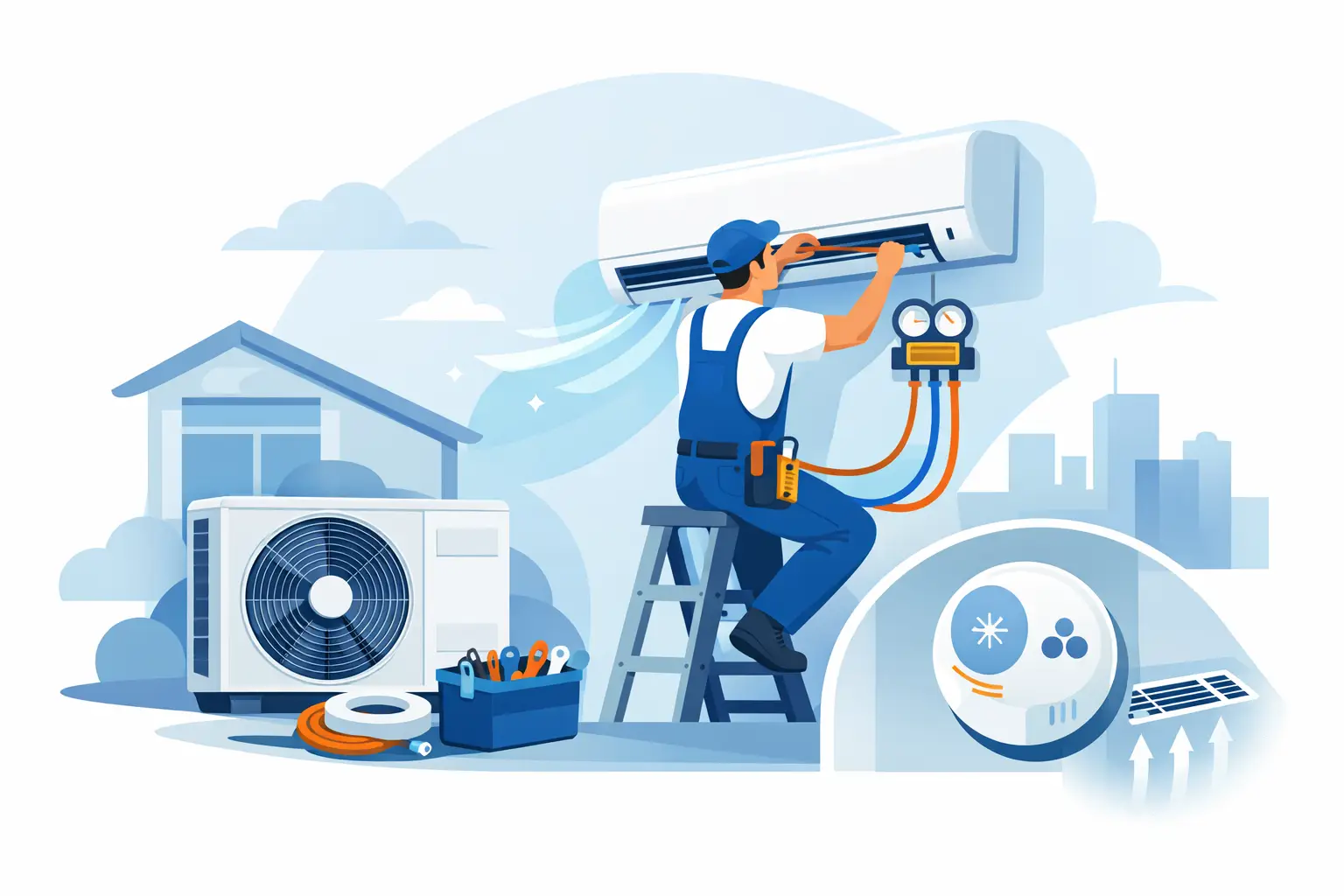
The outdoor unit is set on a stable, level base with adequate clearance for airflow and future service. Indoors, the air handler, furnace coil, or ductless head is mounted and connected according to manufacturer specifications.
Technicians then make the electrical connections, refrigerant connections, condensate drainage, and duct transitions required for the system. These details are not minor. A poorly sealed duct connection can lose conditioned air. An improperly sloped drain line can lead to water damage or shutdowns. Incorrect electrical work can create safety and reliability concerns.
When ductwork needs attention, it should be treated as part of the comfort solution rather than an afterthought. Leaky, restricted, or poorly designed ducts can prevent a new air conditioner from delivering the airflow you paid for. In some cases, targeted duct repair is enough. In others, larger modifications may be the practical path to better room-to-room comfort.
Testing, Charging, and Commissioning
After installation, the system must be tested before the job is complete. Technicians verify electrical operation, airflow, thermostat function, drainage, refrigerant performance, and temperature change across the equipment. They check for leaks and confirm the unit is operating within the manufacturer’s specifications.
This final stage is often called commissioning. It is what turns installed equipment into a functioning comfort system. Skipping careful startup checks can hide issues that later show up as poor cooling, high utility bills, frozen coils, or premature repairs.
A professional should also show you how to operate the thermostat, explain filter needs, and answer practical questions about maintenance. Clear communication is part of doing the job right.
When Installation May Include More Than the AC Unit
A complete installation does not always mean replacing every component. Still, it is wise to evaluate the full system before making a decision. If the furnace or air handler is older, incompatible, or near the end of its service life, replacing it with the AC may avoid mismatched equipment and another major project soon after.
Other upgrades may be worthwhile when they solve a documented problem. These can include a new thermostat, drain safety switch, improved filtration, duct sealing, insulation around refrigerant lines, or indoor air quality equipment. The key is purpose. Each recommendation should be tied to comfort, safety, performance, or reliability, not added simply to increase the invoice.
For commercial properties, installation planning may also need to account for tenant schedules, access restrictions, rooftop equipment, code requirements, and business downtime. The goal remains the same: complete the work safely and efficiently with minimal disruption.
How Long Does an AC Installation Take?
Many standard residential replacements can be completed in one day. More complex jobs may take longer, especially when ductwork, electrical upgrades, new equipment locations, zoning, or major system changes are involved.
Weather, equipment availability, permit requirements, and unexpected conditions inside an attic or mechanical closet can also affect timing. A reliable HVAC company will set realistic expectations instead of promising a timeline that does not fit the work.
Before the appointment, clear access to the indoor and outdoor equipment areas helps the crew work efficiently. If you have pets, arrange for them to stay safely away from work zones. It is also helpful to ask whether the cooling system will be off for the full day, particularly during extreme heat.
What Should You Look for in an Installation Estimate?
A clear estimate should identify the proposed equipment and scope of work, rather than offering a vague price for “a new AC.” It should explain whether the quote includes removal of old equipment, installation materials, electrical work, thermostat changes, drain line work, duct modifications, permits if required, and startup testing.
The lowest quote is not always the lowest long-term cost. A price that leaves out necessary materials, commissioning, or repairs can create surprise charges or performance issues after installation. On the other hand, not every installation requires extensive add-ons. The right recommendation is based on an inspection of your property and a straightforward explanation of the options.
Cadillac Air Conditioning & Heating approaches installation as a professional trade, with careful evaluation, transparent recommendations, and workmanship designed to last. Whether the right answer is a targeted repair, a system replacement, or an efficiency upgrade, the decision should serve your comfort goals and budget.
A new AC system should give you confidence when the forecast calls for another stretch of Texas heat. Ask questions, review the scope carefully, and choose an installer who is willing to explain the work before it begins. That attention upfront is one of the best ways to protect your comfort for years to come.
