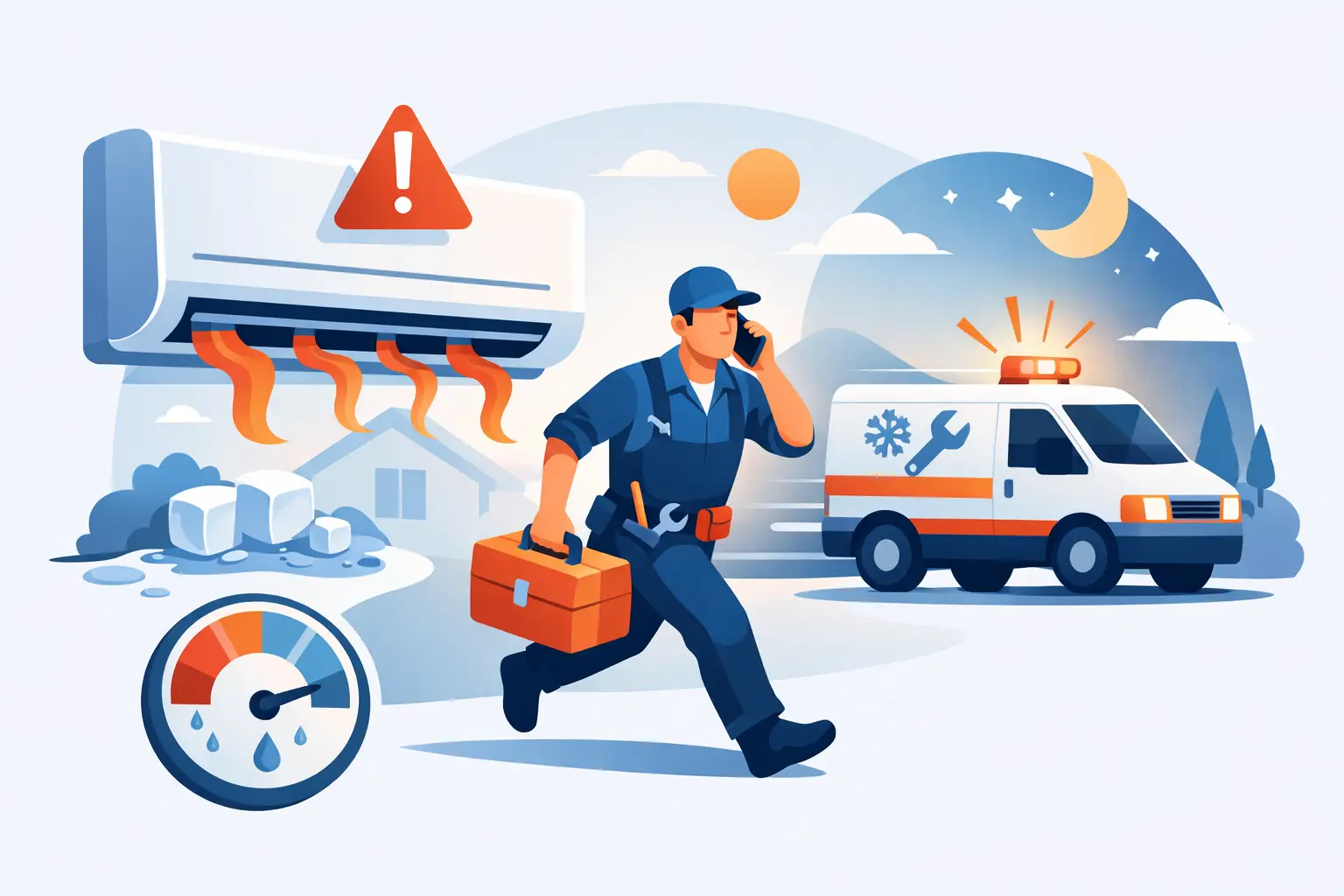
At 9 p.m. in a San Antonio summer, an AC problem stops feeling minor very quickly. When the house is getting hotter by the hour, the system is blowing warm air, or water is leaking around the unit, ac repair emergency service becomes less about convenience and more about protecting your comfort, property, and safety.
Not every air conditioning issue is a true emergency, but some situations should never wait until morning. The difference matters. Calling too late can turn a manageable repair into compressor damage, electrical problems, water damage, or a complete system shutdown. Calling the right HVAC company at the right time helps you get an accurate diagnosis, a clear explanation of the problem, and a repair plan that makes sense for your home or business.
What counts as an AC repair emergency service call?
A true emergency usually means one of two things. Either the system has failed in a way that creates an immediate comfort or safety issue, or continuing to run it could cause more serious damage.
For most homeowners, that means a complete loss of cooling during extreme heat, especially when young children, older adults, or anyone with health concerns is in the home. For businesses and property managers, it can also mean tenant complaints, disrupted operations, overheated spaces, or equipment and inventory at risk.
Some problems are clearly urgent. A system that will not turn on at all, an AC that trips the breaker repeatedly, a burning smell from the unit, ice covering the evaporator coil, or water leaking into ceilings, walls, or flooring should be addressed quickly. Weak airflow can also be an emergency if indoor temperatures are climbing fast and the system cannot keep up.
Other issues may be serious without looking dramatic at first. Short cycling, loud grinding, rattling, or screeching, and an outdoor unit that hums but does not start can signal electrical or mechanical failure. In those cases, waiting can make the final repair more expensive.
Signs you should not wait until regular business hours
The clearest sign is simple: your AC is not cooling and indoor temperatures are becoming unsafe or unmanageable. In Texas heat, that can happen faster than many people expect.
You should also call for emergency service if you notice a strong burning odor, smoking components, sparking, or repeated electrical issues. These are not wait-and-see problems. Turn the system off if you can do so safely and call for service.
Water where it should not be is another common reason for urgent repair. A clogged drain line or frozen coil may start as an AC issue, but once water reaches drywall, insulation, or flooring, it becomes a property damage issue too.
There are also cases where the system is technically running, but clearly failing. If it is blowing warm air during peak heat, making loud metal-on-metal sounds, or shutting itself off after a few minutes, it needs prompt attention. Continuing to force the unit to run can lead to more extensive damage.
When it might not be an emergency
It depends on the symptoms. If the system is cooling but not as evenly as usual, if one room is warmer than another, or if your thermostat programming is off, you may not need after-hours service. The same goes for a dirty filter that is restricting airflow but has not yet caused the system to freeze or shut down.
That said, minor issues do not always stay minor for long. A weak-capacity problem on Friday afternoon can become a full outage by Saturday evening. If you are unsure, the smartest move is to call and describe the symptoms clearly. A trustworthy HVAC company will help you determine whether it needs immediate service or if it can be scheduled during normal hours.
What happens during an emergency AC repair visit
A professional emergency visit should start with diagnosis, not guessing. The goal is to identify the actual cause of the failure rather than replacing parts blindly.
In many cases, the technician will inspect the thermostat, electrical components, capacitor, contactor, blower motor, condenser, refrigerant performance, drain line, air filter, and safety controls. If the issue is more complex, they may also evaluate the compressor, evaporator coil, duct performance, and system age to determine whether repair is still the practical option.
This is where honest communication matters. Some failures have a straightforward fix. Others have layers. A clogged drain line may be the visible issue, but the technician may also find poor airflow or deferred maintenance that caused the problem. A frozen coil may point to low refrigerant, but it can also come from airflow restrictions or blower issues. Good emergency service means explaining what failed, what caused it, and what should happen next.
Transparent pricing matters just as much. During an after-hours call, customers should still receive clear recommendations and a realistic path forward. Pressure tactics have no place in emergency HVAC work. If a repair is appropriate, it should be presented honestly. If replacement is the better long-term decision, the reasons should be explained clearly.
Why fast diagnostics matter more than a fast guess
In an emergency, speed matters, but accuracy matters just as much. A rushed guess can lead to the wrong repair, another breakdown, and more frustration a few days later.
The best emergency HVAC service balances response time with workmanship. That means showing up prepared, checking the full system, confirming the failure point, and repairing the issue correctly the first time whenever possible. For homeowners and business owners, that reduces repeat visits, protects the equipment, and keeps costs more predictable.
This is especially important for older systems. It is easy to assume any emergency breakdown means the entire unit needs to be replaced. Sometimes that is true, especially if major components have failed and the system is already near the end of its service life. But sometimes a targeted repair is still the right move. It depends on the age of the equipment, the repair history, energy performance, and the condition of the major components.
Common emergency AC problems in Texas heat
In the San Antonio area, heavy summer demand puts AC systems under real pressure. Capacitors fail, condensers struggle in extreme temperatures, drain lines clog, blower motors wear down, and neglected filters create airflow problems that lead to frozen coils and poor cooling.
Electrical issues are also common during peak season. A system that starts hard, trips breakers, or fails to power on may have a failing capacitor, contactor, motor, wiring issue, or compressor problem. These are not issues to keep resetting and hoping for the best.
Refrigerant-related issues can be more complicated. Low refrigerant is not a maintenance item like changing a filter. If refrigerant is low, there is usually a leak or a system problem that needs to be found and addressed properly. Simply topping it off without diagnosing the cause may restore cooling briefly, but it usually does not solve the real issue.
How to protect your system before help arrives
There are a few safe steps you can take while waiting for emergency service. Check the thermostat settings and make sure the breaker has not tripped once. If the filter is visibly dirty, replace it. If you see ice on the indoor unit or refrigerant lines, turn the system off to help prevent further strain. If water is leaking, shut the system down and protect nearby flooring or belongings if possible.
Beyond that, avoid DIY repairs. AC systems involve electricity, moving parts, and refrigerant components. The risk is not worth it, especially during an already stressful situation.
Choosing the right ac repair emergency service provider
Emergency service is not just about who answers the phone first. It is about who shows up ready to diagnose the issue honestly and fix it correctly.
Look for a company that offers true emergency response, communicates clearly, and explains repairs without pushing unnecessary replacements. You want technicians who respect your time, your property, and your budget. You also want a company that understands the difference between a temporary patch and a dependable repair.
For homeowners, property managers, and businesses, trust matters most when the pressure is on. Cadillac Air Conditioning & Heating approaches emergency calls with the same standards that should apply to every service visit: accurate diagnostics, transparent pricing, quality workmanship, and recommendations based on what is best for the customer, not what creates the biggest ticket.
The right time to call is usually earlier than people think. If your system has stopped cooling, is leaking, making alarming noises, or creating an electrical concern, getting professional help quickly can protect both your comfort and your equipment. A fast, honest response can turn a bad night into a repair that is handled the right way.
