
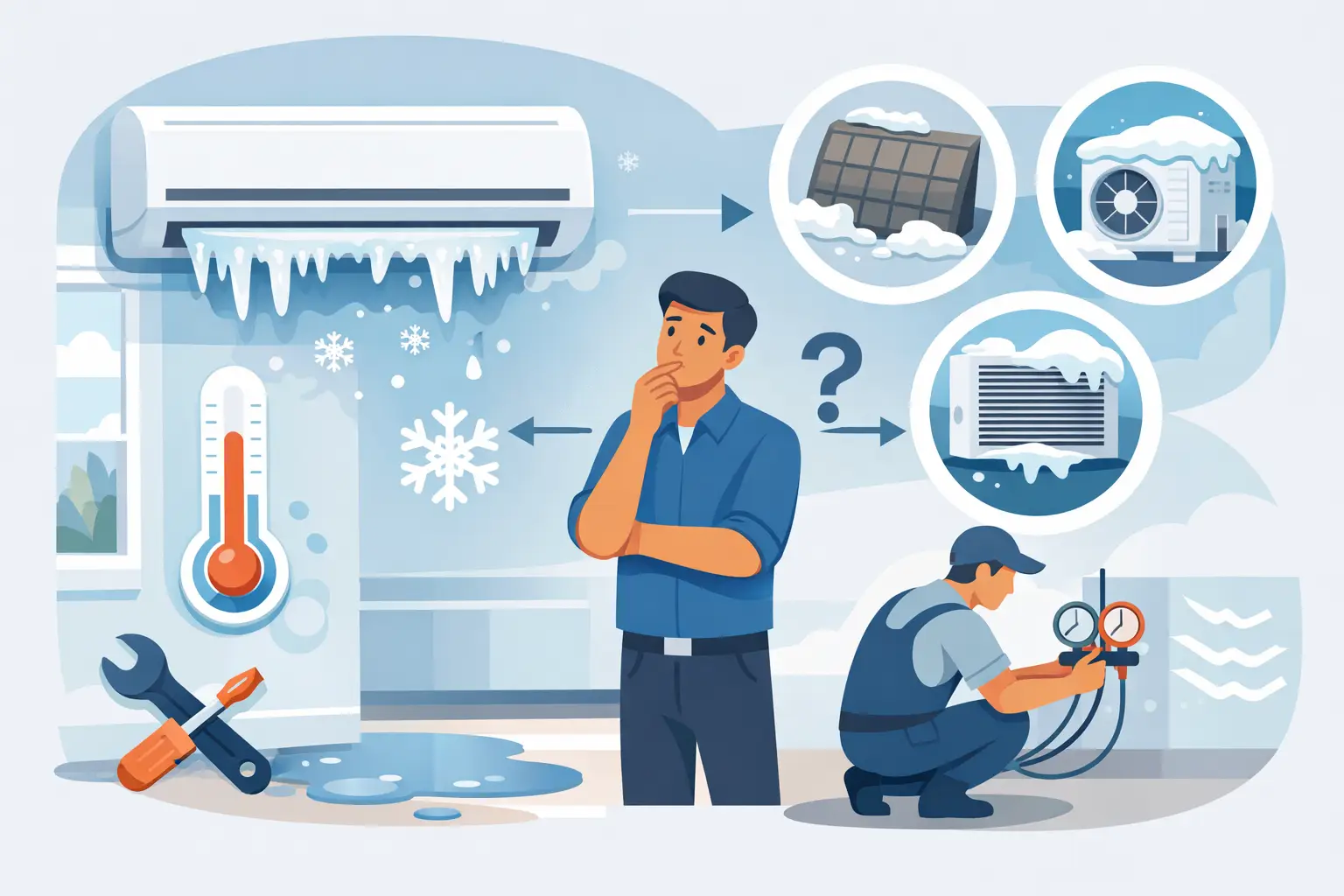
A frozen air conditioner is more than an inconvenience on a hot San Antonio day. Ice on the indoor coil, refrigerant line, or outdoor unit can stop your system from cooling and may lead to compressor damage if it keeps running. If you are asking, why is my AC freezing, the short answer is that something is preventing the system from absorbing and moving heat the way it should.
The visible ice is the symptom, not the repair. Turning the system back on after the ice melts without finding the underlying cause can put the same strain right back on your equipment. A careful diagnosis protects your comfort, your energy costs, and the life of your AC system.
Why Is My AC Freezing in the First Place?
Your AC cools your home by pulling heat from indoor air across an evaporator coil. Refrigerant inside that coil absorbs the heat, while the blower moves cooled air back through your ductwork. For that process to work correctly, the coil needs enough warm air flowing over it and the refrigerant charge must be correct.
When airflow drops too low or refrigerant pressure falls outside the proper range, the coil temperature can drop below freezing. Moisture in the air then freezes onto the coil. As ice builds, it blocks even more airflow, creating a cycle that can leave the entire coil and refrigerant line covered in ice.
A dirty or restricted air filter
A clogged filter is one of the most common and preventable reasons an AC freezes. A filter packed with dust, pet hair, or construction debris restricts airflow before it reaches the evaporator coil. The coil gets too cold, condensation freezes, and cooling performance quickly declines.
Check the filter first, especially if it has not been changed in the last one to three months. In San Antonio, heavy summer use, pets, allergies, and nearby dust can shorten a filter’s useful life. Use the filter size and rating recommended for your system. A very high-density filter may improve particle capture, but it can also restrict airflow if the equipment is not designed for it.
Closed vents, blocked returns, or duct problems
Closing supply vents in unused rooms may seem like a practical way to save energy, but it can create airflow problems for a central AC system. The same is true when furniture, rugs, or stored items block return-air grilles. Your system was designed to move a certain amount of air, and restricting that path can contribute to a frozen coil.
Damaged, disconnected, or undersized ductwork can also reduce airflow. Property managers may notice this issue in one unit or area of a building, while the rest of the property seems comfortable. A technician can measure airflow and inspect the duct system rather than guessing based on ice alone.
A dirty evaporator coil or blower component
Even with a clean filter, dust can eventually collect on the evaporator coil or blower wheel. That buildup acts like a barrier between the indoor air and the coil, reducing heat transfer and airflow. The system may run longer, cool unevenly, and eventually freeze.
This is not usually a do-it-yourself cleaning job. The evaporator coil is located inside the indoor air handler or furnace cabinet and can be damaged by improper products, tools, or handling. Professional maintenance allows the technician to inspect and clean components safely while checking for other causes of restricted airflow.
Low refrigerant from a leak
Refrigerant does not get used up like fuel. If your system is low, there is usually a leak that needs to be located and repaired. Low refrigerant pressure can make the evaporator coil too cold, causing ice to form even when the filter and vents are clear.
You may also notice weak cooling, warm air from some vents, hissing sounds, or higher utility bills. Simply adding refrigerant without finding the leak is a temporary measure at best. An honest repair should address the source of the leak, explain the condition of the system, and give you clear options based on the equipment’s age and overall condition.
Blower motor, thermostat, or electrical issues
Your indoor blower must run at the correct speed to move enough air across the coil. A failing blower motor, weak capacitor, damaged control board, or improperly set fan speed can all contribute to freezing. In some cases, the blower may be running but moving far less air than it should.
Thermostat problems can also play a role, particularly if the system runs continuously or cycles in an unusual pattern. These issues require testing. Replacing parts based on a symptom alone can waste money and still leave the original problem unresolved.
Running AC when outdoor temperatures are too low
Central air conditioners are generally not intended for normal cooling operation during cool outdoor weather. If the outside temperature is low enough, system pressures can drop and allow the indoor coil to freeze. This can happen during a mild evening, after a weather shift, or in a commercial space that needs cooling for internal heat loads year-round.
Businesses with server rooms, kitchens, or high-occupancy areas may need specialized controls or equipment for low-ambient cooling. The right solution depends on the building and how the system is used.
What to Do When Your Air Conditioner Freezes
First, turn the cooling mode off. Continuing to run the compressor while the coil is frozen can increase the risk of costly damage. If your thermostat allows it, switch the fan setting to ON to circulate room-temperature air through the system and help the ice thaw. Do not set the thermostat lower in an attempt to force cold air from a frozen unit.
Replace a visibly dirty filter, make sure supply vents and return grilles are open and unobstructed, and check for obvious airflow restrictions around the indoor unit. Then allow the system to thaw completely. Depending on the amount of ice, that can take several hours or longer. Keep towels nearby if melting ice may drip around the indoor equipment.
Do not chip ice from the coil or refrigerant line with a screwdriver, knife, or other sharp tool. Coil fins and refrigerant tubing damage easily, and a small puncture can turn a repairable airflow issue into a refrigerant leak. Avoid repeatedly restarting the system to see whether it will recover.
When a Frozen AC Needs Professional Repair
If the system freezes again after you replace the filter and restore airflow, it is time for a qualified HVAC technician to inspect it. You should also schedule service promptly if you see ice return often, hear unusual noises, notice water around the indoor unit, smell electrical burning, or receive little to no cool air after the system has thawed.
A proper service visit should include more than removing ice or adding refrigerant. The technician should inspect the filter and duct airflow, evaluate the blower, examine the evaporator coil, test electrical components, and check refrigerant pressures. If a leak is suspected, the next step is identifying its location and discussing a repair that makes sense for your system.
Cadillac Air Conditioning & Heating provides accurate diagnostics, clear explanations, and transparent repair recommendations for San Antonio homes and businesses. The goal is to correct the reason your AC froze, not sell a part or replacement that your system does not need.
Can Preventive Maintenance Keep an AC From Freezing?
Preventive maintenance cannot prevent every failure, but it catches many freezing causes before they become an emergency. During a maintenance visit, a technician can check airflow, clean accessible components, inspect the condensate drain, test electrical parts, and look for early signs of refrigerant or blower trouble.
Homeowners can support that work by changing filters regularly, keeping outdoor equipment clear of grass and debris, and paying attention when rooms start cooling unevenly. Small changes in comfort or runtime are often the first warning signs that an AC is working harder than it should.
A frozen AC deserves a timely response, especially during a Texas heat spell. Shut cooling off, let the system thaw, address any simple airflow issue you can safely see, and arrange a professional diagnosis if the ice returns. A repair done right the first time can restore dependable cooling and help you avoid a much larger problem when you need your system most.
