A room that never seems to cool, a vent that barely blows, or a utility bill that keeps climbing can point to a problem hidden above the ceiling or behind the walls. Professional air duct repair services address the ductwork that carries conditioned air through your home or business, helping your HVAC system deliver the comfort you are already paying for.
At Cadillac Air Conditioning & Heating, we approach duct concerns with accurate diagnostics first. Not every airflow issue starts in the ducts, and not every damaged section requires a full replacement. The right repair begins with a clear look at the system, an honest recommendation, and workmanship built to last.
Why Ductwork Condition Matters
Your air ducts are part of the HVAC system, not simply a passageway for air. When ducts are sealed, connected correctly, sized appropriately, and properly supported, heated and cooled air can move efficiently from the equipment to each room.
When that ductwork is damaged or poorly connected, conditioned air may escape into an attic, crawlspace, wall cavity, or unconditioned storage area. The system then has to work longer to reach the thermostat setting. That can mean uneven temperatures, added wear on equipment, more dust moving through the home, and higher energy use.
San Antonio homes face long cooling seasons, so even a modest duct leak can become more noticeable when the AC runs for hours at a time. Businesses can experience similar problems, especially in spaces with additions, remodeled offices, or aging rooftop and split-system ductwork.
Signs You May Need Air Duct Repair Services
Some duct issues are visible, such as a loose connection near an air handler or a crushed flexible duct in the attic. More often, the warning signs show up in daily comfort and system performance.
One common sign is a persistent temperature difference between rooms. If the thermostat is set correctly but a bedroom stays warm in summer or chilly in winter, the issue could be a disconnected run, a restricted duct, inadequate insulation, or a balancing problem. It could also be related to the HVAC equipment itself, which is why a complete diagnosis matters.
Weak airflow from one or more vents is another reason to schedule an inspection. A blocked register is easy to check, but weak airflow can also result from leaks, collapsed flex duct, damaged dampers, dirty components, or a blower issue. Closing too many supply vents to force air elsewhere is not a reliable fix and can create pressure problems in the system.
You may also notice excessive dust, musty odors, rattling near the ceiling, or unusually high energy bills. None of these symptoms proves the ducts are at fault on its own. However, when several appear together, it is worth having a trained HVAC professional evaluate the duct system along with the equipment.
What a Professional Duct Repair Visit Should Include
Reliable repairs begin with investigation, not guesswork. A technician should inspect accessible duct runs, connections, insulation, supply and return paths, and the condition of the surrounding system. They should also ask practical questions about which rooms are uncomfortable, when the problem began, and whether the building has been remodeled.
Finding the Actual Source of the Problem
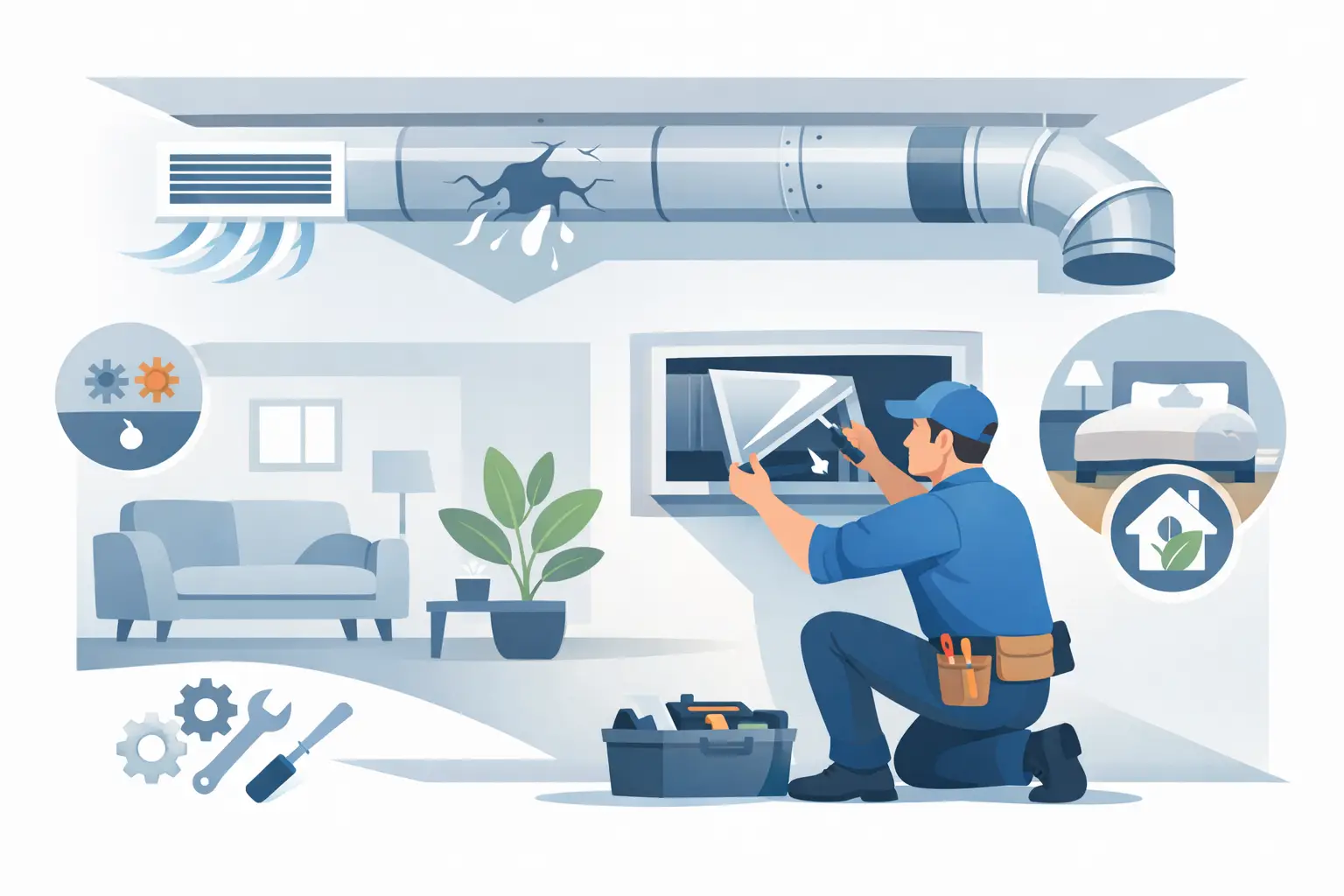
Airflow complaints can come from several places. A leaking return duct may pull hot, dusty attic air into the system. A supply duct leak may lose cooled air before it reaches the room. A damaged boot at the register, an improperly sealed plenum, or a duct run that has come loose can all create different symptoms.
The goal is to identify the specific failure rather than apply a temporary patch where it is easiest to reach. For property managers and business owners, this approach is especially valuable because it helps avoid repeated service calls for the same comfort complaint.
Making Repairs That Hold Up
Depending on the condition of the ductwork, repairs may include reconnecting separated sections, securing sagging flexible ducts, sealing joints and penetrations, replacing crushed or torn sections, repairing damaged boots, or restoring insulation around repaired areas.
Proper materials matter. Duct tape is not a long-term answer for HVAC duct repairs, despite its name. Quality sealing methods and correctly installed mechanical connections help the repair remain secure through temperature changes, vibration, and regular system operation.
A repair should also preserve airflow. Flexible duct that is sharply bent, stretched too tightly, or allowed to sag can restrict air even when there is no obvious hole. Correcting routing and support can make a meaningful difference in room-to-room comfort.
Repair or Replacement: How to Make the Right Call
Repair is often the sensible choice when the problem is isolated. A single disconnected run, a damaged branch duct, loose fittings, or a poorly sealed connection can usually be corrected without replacing the entire system.
Replacement may be more practical when ductwork is extensively deteriorated, improperly designed, undersized for the current HVAC system, or repeatedly failing in multiple areas. Older duct systems may also have insulation damage or materials that no longer perform well. If a home addition was completed without properly updating the duct layout, a larger correction may be needed to deliver balanced airflow.
There is a cost trade-off. A targeted repair costs less upfront and is the right choice for a localized issue. A larger duct upgrade requires more investment, but may improve efficiency, comfort, and equipment performance when problems are widespread. An honest contractor should explain both options clearly, including what each one is expected to solve, without pushing replacement when a repair will do the job.
How Duct Repairs Can Improve Efficiency and Comfort
A properly repaired duct system helps your heating and cooling equipment operate under more normal conditions. That does not mean every repair will produce the same utility savings. Results depend on the size and location of leaks, the system’s condition, insulation levels, thermostat settings, and how the building is used.
Still, restoring duct integrity often helps reduce wasted conditioned air and improve airflow to rooms that have been underserved. It can also reduce the strain created when an AC or heating system runs longer than necessary to compensate for leakage or restrictions.
Comfort improvements can be just as valuable as energy improvements. A repaired duct run may help a back bedroom cool more consistently, make an office easier to work in, or reduce the hot and cold spots that frustrate tenants and customers.
Protecting Your Ductwork After a Repair
Once a duct repair is complete, regular HVAC maintenance helps protect the system as a whole. Change filters on schedule, keep supply and return vents clear, and avoid using the attic for storage in a way that crushes or disconnects duct runs. If you notice a new rattle, weak airflow, or a sudden comfort change after construction work or pest activity, have it checked before the problem grows.
For commercial properties, planned maintenance is especially useful because it gives technicians an opportunity to spot accessible duct concerns before they affect occupants, equipment runtime, or day-to-day operations.
Choose Clear Answers, Not Quick Guesses
Air duct problems are easy to overlook because most of the system is out of sight. But the effects are felt every time a room stays uncomfortable or the HVAC system seems to run without keeping up. A professional assessment gives you a practical path forward, whether that means a focused repair, airflow adjustment, equipment service, or a larger ductwork recommendation.
If your home or business has uneven temperatures or weak airflow, schedule an inspection with a local HVAC team that explains what it finds and why it matters. The right repair can bring comfort back to the rooms where you need it most.
